One of the most common questions I hear is:
“If the vehicle has a clean Carfax and looks great, do I really need an inspection?”
The answer is simple.
Absolutely.
Recently, I was contacted by the son of an elderly woman here in Sarasota, Florida. He lived out of state and wanted peace of mind before his mother purchased a vehicle on her own. Like many families, he couldn’t be there in person, so he hired me to inspect the car before she made such an important purchase.
The vehicle was a beautiful 2023 Mercedes-Benz CLS.
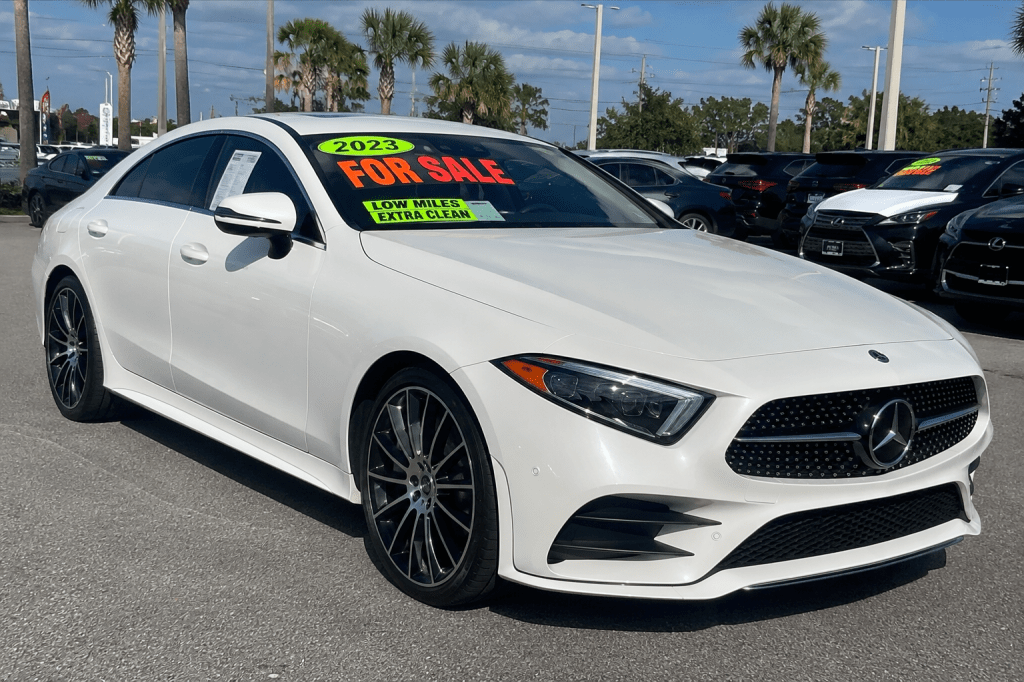
At first glance, it was exactly what most buyers hope to find.
The exterior was immaculate. The white paint had an incredible shine. The interior looked almost brand new, and it was obvious the vehicle had been well cared for. Even the vehicle history report came back clean with no reported accidents or damage.
Everything about the car inspired confidence.
Then we started the inspection.
The Check Engine Light
During the test drive, the check engine light suddenly illuminated.
Using my professional diagnostic scan tool, I found a large EVAP system leak code.
The seller believed it was likely something simple, such as a loose or faulty gas cap. And to be fair, sometimes that really is the cause.
But professional inspections aren’t about making assumptions.
They’re about verifying the facts.
Rather than stopping with the scan tool, I continued through my complete inspection process.
Looking Beyond the Surface
One of the specialized tools I use is a professional paint thickness gauge.
Most buyers have never seen one, but it can reveal a vehicle’s history long after cosmetic repairs have hidden the evidence.
As I checked each panel, everything appeared normal until I reached the rear passenger-side quarter panel.
The gauge had a failed reading.
To most people, that means nothing.
To me, it immediately raised concern.
A failed reading indicates there is no metal directly beneath the gauge. Instead, there is a significant amount of body filler where factory metal should be.
That doesn’t happen during normal ownership.
It happens after substantial body repairs.
The Hidden Damage
I took a closer look.
By carefully inspecting the body lines and surrounding areas, I found evidence of a previous major collision repair concealed beneath the finished paint.
From the outside, the Mercedes looked exceptional.
Beneath the surface told a completely different story.
The previous impact had likely damaged components around the fuel filler neck and EVAP system, making the check engine light much more concerning than a simple gas cap issue.
Based on my professional experience in the automotive industry, I estimated that properly repairing the damage using OEM parts could reasonably fall between $6,000 and $7,200, depending on what additional damage was discovered during disassembly.
But the Carfax Was Clean…
This is one of the biggest misconceptions in the used car market.
A clean vehicle history report does not guarantee a vehicle has never been involved in a serious accident.
History reports are valuable tools, but they only contain information that has been reported to them. If repairs are completed without being reported through those channels, the report may remain completely clean.
That’s why a vehicle history report should be considered one piece of the puzzle—not the entire picture.
The Best Outcome
After reviewing my findings, the buyer decided to walk away from the purchase.
Her son later thanked me for helping his mother avoid what could have become a very expensive mistake.
Did we prevent a $7,000 repair?
Maybe.
Did we give the buyer the information she needed to make an informed decision?
Absolutely.
And that’s exactly why Inspect My Automobile exists.
My goal isn’t to convince someone to buy a vehicle—or talk them out of one.
My responsibility is to uncover the facts, explain what I find, and allow the buyer to make a confident, informed decision.
Sometimes that means confirming a vehicle is an excellent purchase.
Other times, it means helping someone avoid years of unexpected repairs and frustration.
Both outcomes are successful inspections.
Every vehicle has a story.
Some stories are easy to see.
Others are hidden beneath fresh paint, polished wheels, and a spotless interior.
A clean vehicle history report is an excellent starting point, but it should never replace a thorough, independent inspection. My job isn’t to prove a vehicle is good or bad. My job is to look behind the shine, uncover the facts, and give buyers the information they deserve before making one of the largest purchases they’ll ever make.
Sometimes the best money you’ll ever spend on a vehicle is the money that saves you from buying the wrong one.
Thinking about buying a used vehicle? Before you commit, schedule a professional pre-purchase inspection with Inspect My Automobile.
Confidence before commitment.
Professional Disclaimer
The stories shared in the Behind the Shine series are based on actual vehicle inspections performed by Inspect My Automobile. To maintain professionalism and respect for everyone involved, I do not identify the dealerships, businesses, private sellers, or specific locations connected to these inspections.
The purpose of these articles is to educate buyers, not to assign blame.
The automotive industry moves quickly, and dealerships and sellers often process a large volume of vehicles. Some conditions or defects may be unintentionally overlooked, while others may not have been known or discoverable at the time a vehicle was offered for sale. Unless there is clear evidence to the contrary, no findings described in these stories should be interpreted as proof that a seller intentionally misrepresented a vehicle or acted in bad faith.
Every inspection is simply a snapshot of the vehicle’s condition at the time it was evaluated. My goal is to share real inspection experiences, explain what was found, and help buyers make informed decisions before purchasing a vehicle.
 inspectmyautomobile